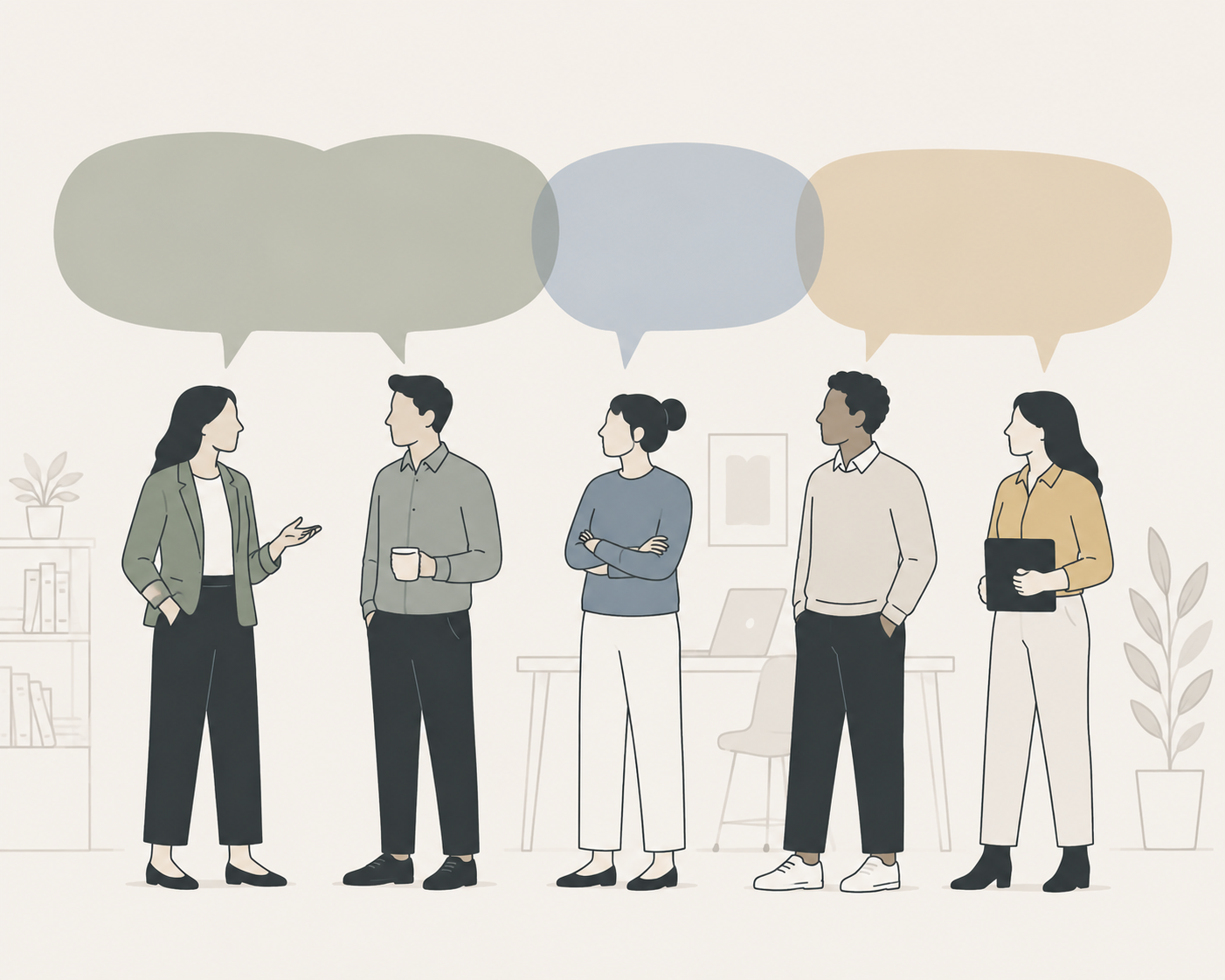
AI has made product and UX teams dramatically more productive at producing things. Decks get written faster, summaries get generated in seconds, and documentation that used to take days now takes an hour. That's real, and it can be valuable.
But something is getting lost in the throughput.
When content can be produced that quickly, the temptation is to produce it and send it. Just move. But what is getting skipped is the conversation that used to happen before the artifact existed, the slower and messier process of getting into a room and figuring out what we actually mean. We are increasingly summarizing each other's AI-generated output with our own AI-generated output, and calling that communication.
AI is great at creating artifacts. It cannot create alignment.
Alignment isn't a content problem, and it isn't solved by a better deck or a cleaner summary or a more thorough document. It happens when people with different contexts, different pressures, and different definitions of the same words sit together long enough to close the gap between them. That requires someone who understands the market, knows the users, can read the room, and can translate in real time across all of it. The artifact is evidence of alignment. It's not the thing that creates it.
STAND-UP EXERCISE
Pick a word or phrase from your current work, something your team uses regularly and probably assumes everyone understands the same way. "Top priority," "launch-ready," "MVP," and "done" are all good candidates, but the most useful one is whatever is most active in your work right now.
Ask everyone to write down independently what that word means to them - what it includes, what it excludes, and what you would have to see or hear to know it was true. Then compare by mapping on a whiteboard or reading aloud.
Look for the gap between answers. Chances are, your stakeholders also have similar gaps in their shared understanding.